

Learning Project Management from Indigenous Fire Ecology: The Key to Preventing the Domino Effect
In the rich tapestry of human knowledge, ancient wisdom often holds answers to modern challenges. One such source of knowledge is the practice of Indigenous Australians, whose methods of preserving their environment offer insightful lessons for modern project management.
An Ancient Solution to a Modern Problem
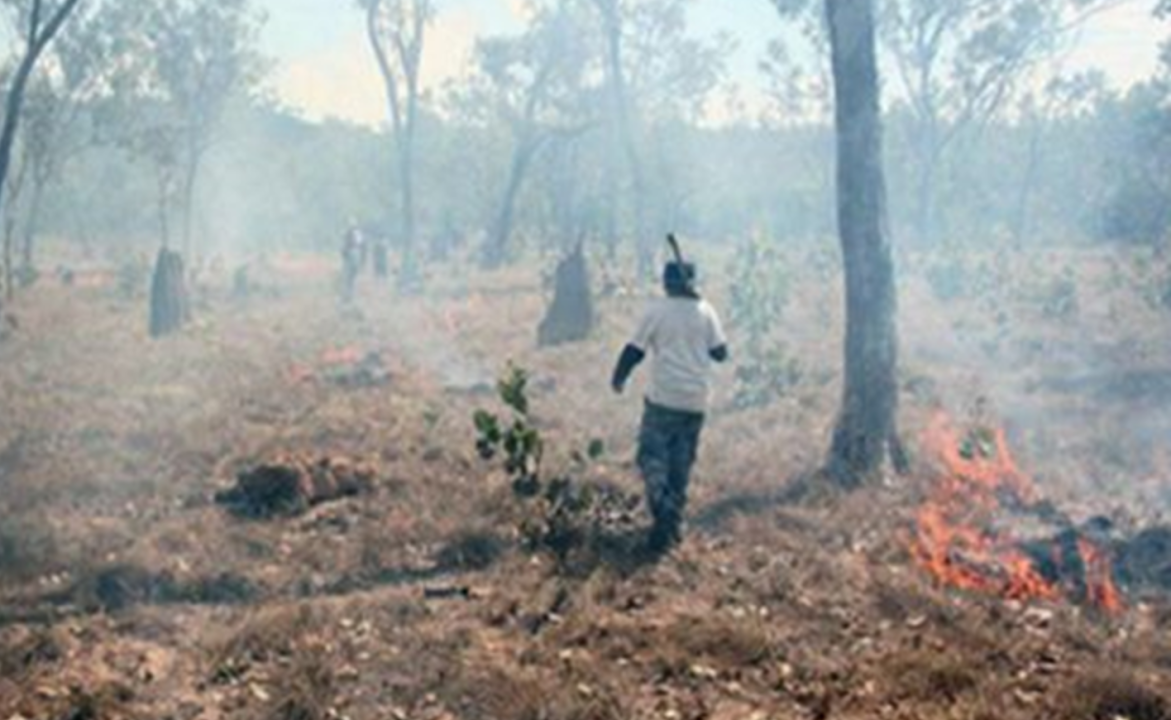
For centuries, Indigenous Australians have skillfully used a technique known as 'fire-stick farming'. They learned that by setting small, controlled fires, they could protect their ecosystem from the devastation of large, uncontrolled wildfires. These 'burns' acted as barriers, slowing or stopping a wildfire's rapid, uncontrollable spread.
This ancient wisdom offers a striking parallel to project management. The domino effect—where one problem triggers another, leading to a cascade of issues—can be devastating to projects. However, by strategically 'burning holes' in project schedules—creating buffers or margins for error—project managers can better manage risks and prevent entire projects from going awry.
Creating Buffers: The Key to Stability
The creation of buffers in project management is akin to Indigenous Australian 'controlled burns'. Buffers provide a project with flexibility and resilience, acting as firebreaks to stop issues from escalating and affecting the entire project. This strategy involves adding time between tasks or at the end of a project, ensuring that delays in one task don't instigate a domino effect.
Anticipate, Don't Just React: The Power of Proactivity
Indigenous Australians didn't wait for wildfires to break out; they anticipated risks and took preventive measures. Effective project management takes the same approach. A proactive project manager identifies potential issues before they arise and plans for them, employing thorough risk management techniques.
Communication and Transparency: The Foundation of Teamwork
In Indigenous Australian communities, everyone was aware of the fire-stick farming strategy. This transparency ensured shared knowledge and cooperative efforts. The same principles apply to project management. Clear communication about the project schedule, including any buffers, ensures alignment across the team, preventing misunderstandings and conflicts.
Exploring Buffering Through NetLogo: A Practical Demonstration
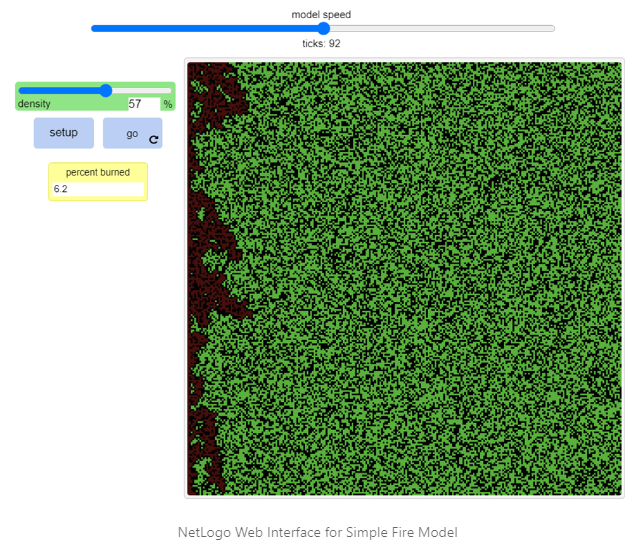
NetLogo, an interactive, programmable modeling environment, provides an intriguing perspective on these theories. A known example in NetLogo library is a forest fire simulation, adjusting the density of the forest to observe the fire's spread and the effect of different 'buffer zones' on its containment.
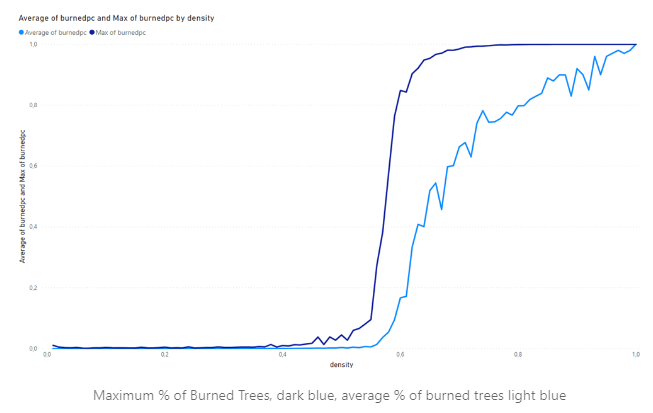
We conducted this experiment 100 times for each 1% increase in forest density. The results were predictable at densities near 0% or 100% - the fire either didn't catch, or it consumed the entire forest. However, the zone of unpredictability lay between 55% and 60% forest density, where results varied significantly.
Interestingly, densities of 55% to 57% resulted in the maximum number of 'good trees' saved, signifying the optimal balance for project scheduling. In the context of project management, maintaining a 'density' or project schedule buffer of around 56% provides the ideal balance between productivity and risk management.
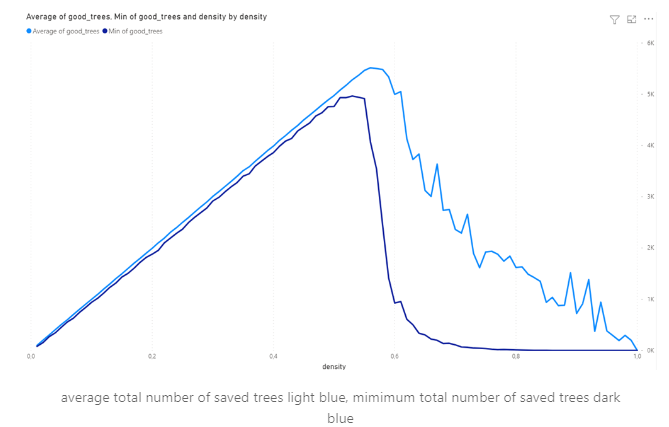
average total number of saved trees light blue, mimimum total number of saved trees dark blue.
The significance of this graph merits further exploration. The model indicates that operating at a density of either 50% or 60% will yield roughly the same average throughput. However, there's a stark difference in the curve's derivative and the variance between average and worst-case scenarios at these densities.
At 50% density, a slight shift in density—49% or 51%—has a minor and predictable effect on throughput, and the disparity between average and worst-case scenarios is approximately 3%. Conversely, at 60% density, the change in slope is much greater and in the opposite direction. Moreover, the gap between the average case and the worst case increases dramatically to about 80%.
In practical terms, the seemingly minor increase in overall fill rate from 50% to 60% can have a catastrophic impact on our ability to predict outcomes, without providing any significant benefit to the average throughput.
Practical Implications for Businesses
Achieving this balance is crucial for businesses. Training staff to monitor their schedules and ensure they do not exceed this 56% threshold for the upcoming weeks or month helps maintain a sufficient buffer, preventing the domino effect from arising and avoiding compromised productivity.
However, the signs of exceeding this threshold can sometimes be subtler and more pervasive than a mere schedule overrun. As a senior manager, if you notice that your team is not taking vacations, showing signs of mental fatigue due to high-stress levels, and constantly struggling to meet deadlines despite their best efforts, or even in the presence of consistent and continous planning to compress the schedules for delivery time optimization, these are all red flags that your company may be running past the optimal threshold.
In these situations, your organization could be caught in a dangerous loop: overcommitment leads to lower productivity, decreased quality, and increased stress, creating an unstable environment. Counterintuitively, the solution here is not to push harder, but to slow down. By easing the schedule, reducing stress, and allowing for recuperation, you create the conditions for productivity to thrive. It is within these conditions that higher quality, stability, and, ultimately, greater overall output are achieved. This exemplifies the ancient wisdom of 'controlled burns', translating it into modern project management.
By recognizing and addressing these issues, managers can better foster a healthy, productive work environment, effectively saving their 'forest' from the potential 'wildfire' of project failure
Final Thoughts
The wisdom of Indigenous Australians, coupled with the tangible insights from the NetLogo model, highlights the importance of creating buffers in project management. These buffers, much like the 'controlled burns', provide projects with the resilience to withstand setbacks and continue to thrive.
Just as a well-maintained ecosystem thrives, a well-managed project schedule can adapt and succeed in the face of adversity. It requires the right balance of tasks, effective buffers, and the ability to anticipate potential risks.
Call to Action
Are you a project manager with experiences to share? How have you implemented buffering in your project schedules? Join the conversation and let us know how you plan to use these insights in your projects. Comment below or share this article with your network to spread the wisdom.
Experience the NetLogo simulation for yourself at this NetLogo Simple Fire.
Run the code for yourself download the python mesa model from here.
Enjoyed the content?
If you found this article useful, consider supporting my work with a coffee or exploring the downloadable examples available on my Buy Me a Coffee page. Your support helps keep the motivation high and fuels more hands-on content!
Bibliography
1. Guckenheimer, J., & Ottino, J. M. (2008). Foundations for complex systems research in the physical sciences and engineering. Report from an NSF Workshop.
2. Kerzner, H. (2013). Project Management: A Systems Approach to Planning, Scheduling, and Controlling. John Wiley & Sons.
3. PMBOK Guide. (2023). A Guide to the Project Management Body of Knowledge (PMBOK Guide). Project Management Institute.
4. Schelling, T. C. (1978). Micromotives and macrobehavior. WW Norton & Company.
5. Taleb, N. N. (2007). The Black Swan: The Impact of the Highly Improbable. Random House.
6. Wilensky, U. (1999). NetLogo. http://ccl.northwestern.edu/netlogo/. Center for Connected Learning and Computer-Based Modeling, Northwestern University. Evanston, IL.